
Jellystone has the stones; The Owl House still struggles to come home to roost
Posted by kjohnson1585 in Animation, Television, Uncategorized, Writing on August 13, 2021
(I’m still trying to figure out how to make titles work for these pieces.)
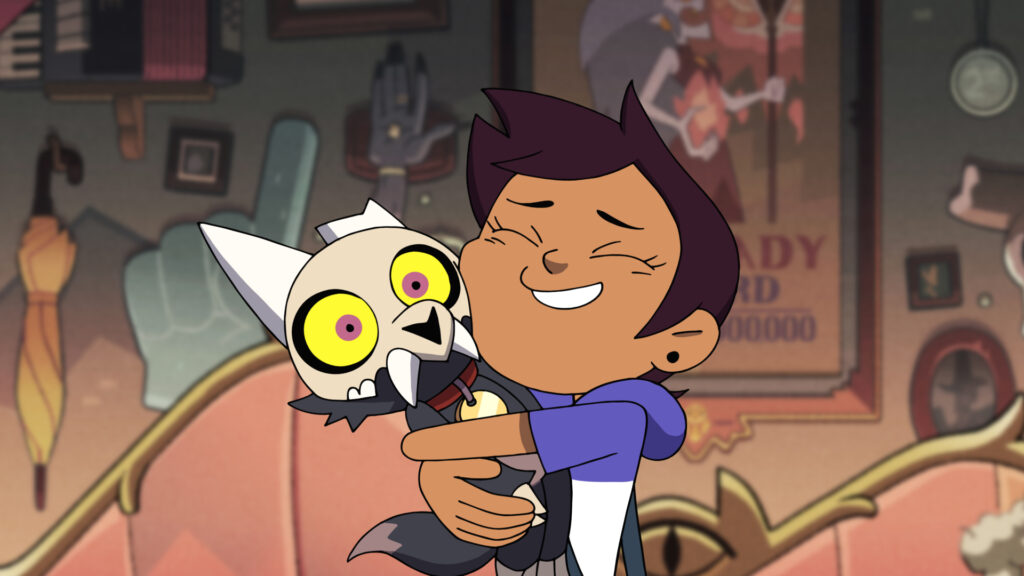
So I have a question about The Owl House. Was there an episode that, straight up, explained what the main nine witch covens actually are? I did some down-and-dirty research, and a wiki pointed out that the nine were mentioned in an episode call “Covention”. I re-watched “Covention”. They did not mention all nine covens. They mentioned one of the nine covens was “Construction,” which is structured around gaining magical strength, which is also an important plot point of the episode, but I don’t think the gaining of magical stretch is ever brought up again in the entire show. Which is weird, especially towards the end of season one where the magical fights escalate in stakes; no one bothers to use power-gaining to escalate in strength.
When The Owl House was first announced, I was quite looking forward to watching it. It had a really cool, nutty locale and the characters seemed fun and appealing. And don’t get me wrong, The Owl House is quite a fun show, but it also feels… well, perhaps not troubled, but restrained? Unsure of itself? There’s a pretty controversial piece of news about the show (which is subject to change I suppose): after this current second season, The Owl House will have one final third season, consisting of three episodes at about an hour and a half each. Even if you think Disney hates the show (which I don’t think they do, and in the next paragraph I’ll elaborate), this kind of decision is weird and unprecedented. It has the flavors of Netflix’s recent push to end some of its animated shows with movies instead of final seasons (Trollhunters, Hilda), but you can chalk that up to Netflix’s push for more affordable, quick content for weekly, new releases than whole-ass seasons. (They sort of did this with Unbreakable Kimmy Schmidt, and not for nothing, but Arlo The Alligator Boy, a fine movie as is, probably would have worked better across ten episodes.)
I think there’s a lot going on with Disney, partially in relation to Disney+. I suspect, spitballing here, that the mandate to find “the next Gravity Falls” got usurped by the push for Disney+ content, and the pandemic sort of solidified that “Disney+ at all costs” notion. A lot of Twitter seem to think its due to a same-sex dating subplot (and I can’t dismiss that out of hand, as many shows have gotten royally screwed when same-sex narratives pop up), but my inclination is that the ratings, business realities, and poor timing left The Owl House on the chopping block. (I have a theory. If the most social media appeal of your show is a “ship,” your show actually on pretty shaky ground.)
The reason I asked about the nine covens at the beginning of this piece is because I feel like knowing what the nine covens are, and who leads them, and how, specifically, they work within the society of the Boiling Isles, would be pretty important to Luz, and The Owl House as a whole. I get that the show is structured from Luz’s point of view, but as an aspiring witch, knowing what those covens are should be a day one question from her (and I get that she’s not supposed to be a great student but still). This ought to be a pretty clear point that show reveals, to flavor the world better, but to also provide the audience some kind of through-line of the world itself. In “Eda’s Requiem,” we finally see the Bard Coven in action, way late in season two. That seems really late, too me.
(I’ve written before about Anne’s weird season one lack of desire to understand the world of Amphibia, and I feel like Luz and The Owl House come from the same place: an incomplete, unfinished understanding of the world each show has created. Same for Star Vs. The Forces of Evil. Something about the way these shows deal with magic is wild if you think about it. It’s simultaneously overly complex and weirdly simple. What makes those nine covens the main ones versus the others? When Star decided to “end all magic,” why was there so little pushback? I wrote about how strange it is that a telethapy-esque spell took several episodes to set up in The Dragon Prince. Magic used to be portrayed in clear, simple terms (point fingers or wands, say some nonsense, strain oneself a bit, flashing lights!). Sometimes you had to find objects or talismans or horcruxes or runes or “places imbued with special powers”. There’s so much going on with magic in these shows now that it’s bordering on distracting; I feel more and more like I have to understand the depth of these spells to understand the depth of these characters nowadays. I partially have the same feeling for Centaurworld, which I will tackle next week.)
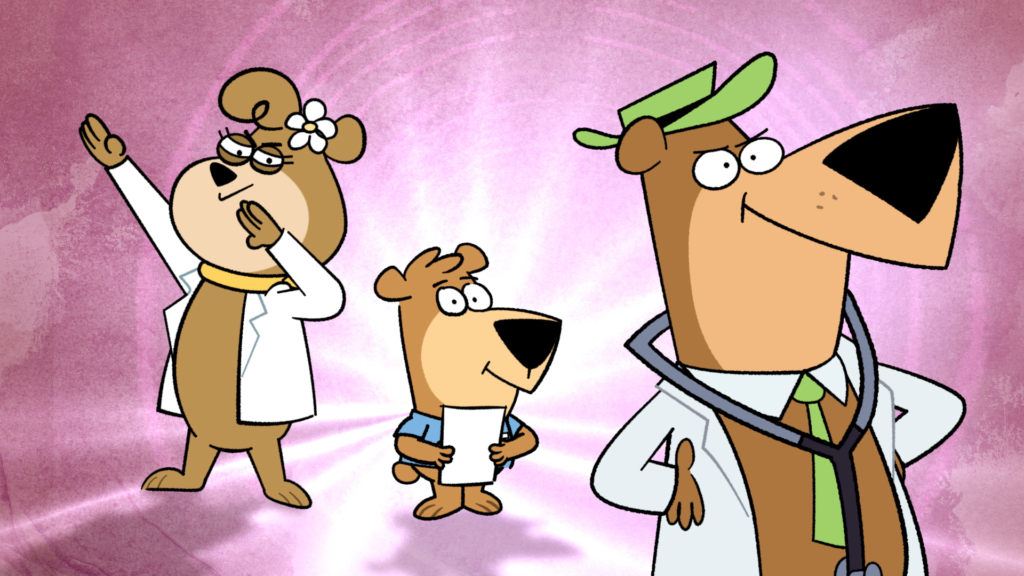
Jellystone, otherwise, is fantastic, and it helps that C. H. Greenblatt is an extremely talented creator, and that the back roster of the sillier Hanna-Barbera cartoons are sketched so thinly that all the new, updated creative choices for these characters work so well. I had my doubts that making Yogi, Cindy, and Boo-Boo doctors/nurses was a good idea, but the core nature of these characters never changed: Yogi is still darkly gluttonous, Boo-Boo is reluctantly submissive, and Cindy… well, Cindy was more the straight-bear of reason; here, she can go toe-to-toe with Yogi on the absurd escalation scale. Greenblatt needed to situation these characters in occupations or locales to give them a broad purpose; the medical field is probably the simplest to utilize, since policing is persona non grata right now, and being a lawyer is probably to complicated to work with in a kids’ show (also its connection to policing).
Many people tend to say Jellystone has a lot of Chowder-type humor, Greenblatt’s first show, but I don’t think that’s true. The two shows have aesthetic similarities for sure, but Chowder was a bit more surreal, I think, and as much as I love that show, you can kind of tell by late in its run it was losing a bit of steam. The world of Chowder was well-drawn but rather limited: you can only do so much with a not-bright, gluttonous kid and his self-absorbed mentor, with an assortment of other weirdo characters to pad things out. Jellystone has a much richer world and character-base to pull from–Hanna-Barbara’s library is rich and varied, and Jellystone has only light touched what it can do with it. Greenblatt and his creative team can make some serious comic moves here (I already thought of two whole potential specs).
More well-known characters like Wally Gator and Snagglepuss, while present, are mere side characters to Jellystone’s heavy hitters like Shag, Augie/Daddy Doggy, and Captain Caveman, who you’d think would have been placed along side the more human characters (more or less used as random shopkeepers and store employees). Loopy gets some choice lines, and I don’t even remember her (well, his) older cartoons ever airing! Top Cat and his crew make splashes, and even the Banana Splits pop up as heavy hitters. Jellystone knows that it has some freedom to re-tool a batch of characters that didn’t exactly hold up well (in the fact that probably seventy percent of these Hanna-Barbera characters have been forgotten by most people). So just the idea that we could see some deep cut characters pop up and steal the show already provides Greenblatt with swaths of material that he lacked in both Chowder and Harvey Beaks.
I’ll probably dabble with the end of The Bad Batch next week, along with a few words about Centaurworld, because I have some stuff to say about that show.

Back to Writing! The Mighty Ones and Monsters At Work
Posted by kjohnson1585 in Animation, Television, Uncategorized, Writing on August 6, 2021
Well, perhaps not a new me. But a new world? Absolutely.
It’s been a while since I’ve even touched this site. To say I’ve been incredibly busy is an understatement. I managed to acquire two actual, genuine writing gigs for animated shows (and always looking for more!), but as the COVID pandemic swept–and continues to sweep–across the nation, my attention had been primarily focused on more visual arts. I’d dabbled in Resolve, After Effects, Unity, and Blender. I did more exercise. I wrote a bit more for The AVClub and Den of Geek. I’ve certainly kept busy, but most of my time has been focused on keeping healthy. This pandemic, as been mentioned several times on social media, has been hell for mental health: trauma, paranoia, ignorance, fear, and outright hostility has become the norm. So, it’s been nigh impossible to really… “get” into a mindset that’s feels appropriate to think about, and write about, cartoons and animation.
This isn’t to say that I haven’t been watching them, though. In fact, I’ve been watching a ton of them, partly because I have to, partly as a means to keep up with the sheer number of new animated shows that’s been dropping on Netflix, Hulu, Nick, Disney, CN, and HBO Max. It’s an onslaught, and for the most part, nothing has been terrible, but I have yet to truly apply any of the robust analytical thinking I used to towards them. I want to get back to that. I want to return to those deep dives, those off-kilter, academic rambles that made this blog a “bit” popular at its small but notable peak. There’s certainly a lot to discuss, and over the next few weeks (months?) I’m hoping to play a little catch up with all the shows I’ve seen.
The plan, as of now, is to present a more informal blog/journal where I mostly talk about the thoughts I have about the cartoons I’m watching. While I’ll still be a bit analytical and all, I think this will best be handle with more of a casual flair, to get my writing juices flowing again, to see if I can foster some non-angry discussion about what’s on the air these days. There’s not gonna be any rhyme or reason to what I talk about, at least for the first couple of weeks: I’m gonna let whatever animated show I feel like discussing flow through my brain and vomit onto the page.
So, let’s just get to it.
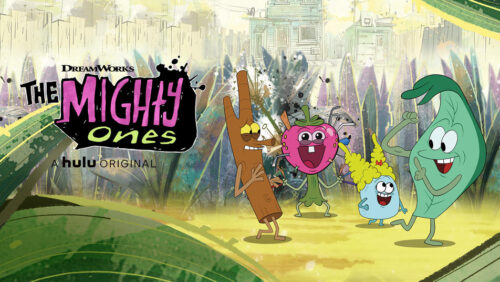
The Mighty Ones is dumb. I mean this as a compliment. The show stars four moronic talking, anthropomorphic objects in nature (a rock, a leaf, a twig, and a berry) fumbling about in a yard own by three women who are equally, if not more so, moronic. Stupidity thrives on this show, the dumbness and confusion structured to maximize laughs and cringe, tinged with the kind of weird and absurd energy that thrived in many post-Spongebob cartoons in the late 2000s, early 2010s. In the very first episode, Rocksy, Twig, Leaf, and Berry don’t know what a “game” is. Later, they talk about, and play, all the dumb games they randomly make up. (Continuity is not a thing here.) It’s cutely funny at times, although the idiocy of the first season can be overwhelming, with an energy that posits throwing as much dumbness at the wall and seeing what sticks. This doesn’t quite make for a binge-able show, but watching one or two episodes at a time is workable. More specifically, it seems to me that the show struggled the most with Leaf. He’s Twig’s brother, but aside from a early benevolent moment in the first season, he treats Twig like shit and mostly plays an arrogant prick. He’s mean, but not really in a funny way. His actions and behavior isolates him from the cast, making him unable to establish a comical rapport among the characters; instead of being a sour, self-centered character communicating with everyone else within the show’s rhythms, Leaf mostly was the guy who couldn’t grasp “Yes and…” and ruined a lot of comic momentum.
So didn’t really surprise me to notice Leaf being mostly absent in season two, which also had the added benefit of bringing in more outside characters into the mix (Leaf–in addition to calming him down a bit, making him a bit more pathetic, and having him speak more comic asides–mostly spends a lot of time gone or in the background.) The Mighty Ones isn’t a particularly deep show, but the sparse, barely populated feel of the yard felt limited, where the idiocy was a function of pure, isolated boredom–just something to do. Season two feels… well, not “purposeful,” but “fuller,” where the four main characters and their actions now can function in something that could plausibly be defined as “a world”. It pushes a comic energy where the dumbness had more to work with, a dumbness in a dumb world, where everyone now competes for… I guess, maximum dumbness. This also has the darkly-relating result of a more fatalist season; characters are placed in absolute harm’s way. The first season was dumb in a silly way; season two very notably has its moronic characters damn near die or killed. Leaf wastes away to barely nothing, Twig is skinned and chewed on repeatedly, and Berry falls in love with a crow that viscously peaks and eats at her fruity, gushy head. The last episode has the crew swallowed by a snake, and… living within the belly, I suppose. With the dark energy of a final episode, they way goodbye to their friends from within the eye of the snake that swallowed them as the snake slithers off into the distance. The Mighty Ones is a tricky show to wrap around; towards the end, I found myself more enjoying the three dim-witted homeowners who thrive in an entirely warped reality that ended up being hilarious. I don’t want to dismiss the antics of the main cast though, even if the show overall never quite snapped into place, which, to be fair, seemed to be the point.
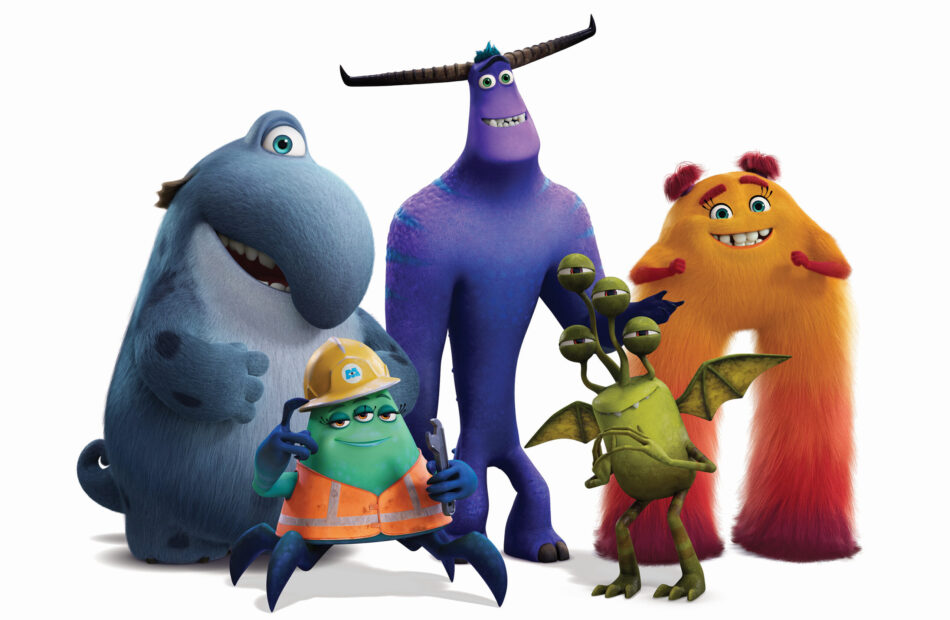
As much as I’d like to discuss more cartoons further, I think I’ll end on a few words on the Disney+ animated show Monsters At Work. A friend of mine once remarked that Pixar films are incredible, amazing films that are best watched once; while I don’t think I’d subscribe to that sentiment full tilt, I do understand that it sort of represents a kind of limitation to the Pixar formula. It seems to have reached its limit with Soul and the assortment of weaker, clumsier sequels churned out by the studio recently; now, imagine that formula chopped up, squeezed, and broken down into 25-minute chunks, and you’d have Pixar’s first foray into animated television.
Again, Monsters At Work isn’t bad. In fact, it’s past three episodes have been a step up from its first three, as the cast starts to feel more interactive with each other, and, more crucially, the lead monster takes on a more active role. The first three episodes mostly has Tyler being a bit clumsy but mostly brushing aside his new coworkers as said coworkers cluelessly quip and praise each other around them. It struggled to work because no one was actually talking to each other? Tyler kept saying specific things that no one would respond to, making the show a bit frustrating watch. There was no interplay among the characters. It also put a bit more emphasis on Mike and Sully who are clearly phoning it in (Goodman more so than Crystal, but both of them really sound like they’re doing their VO work while lying in bed).
But when “The Big Wazowskis” comes around, a shift notably occurs. Tyler takes a more active, if sitcom-lazy, role, which really showcases how pathetic and (slightly) self-absorbed he is. Admittedly, if he started off like that, I could see that leaving a bad taste in viewers mouths, but at the very least Tyler now has a personality that’s more than “knocked-around”. In a desperate attempt to nab Mike’s attention, Tyler distracts his irritating coworkers and their bowling desires and brings in a much better group of bowlers. It’s pretty funny to watch Tyler’s flop-sweat work at a more active level than passive, which also allows for a tad bit more poignancy to the events when he’s caught. “The Cover Up” is even funnier, where Tyler is directly pitted up “against” Duncan (the conflict is one-sided, in that Duncan’s hostility towards Tyler is never reciprocated) but still are often forced to work together to solve problems that they cause. In this episode, there’s a tinge of American Dad nuttiness, where an inspector arrives to shut them down, but Tyler and Duncan knock him out, then try to get rid of the body. Monsters At Work still has issues, mostly stemming from the core premise–monsters working to make children laugh via a bureaucratic infrastructure that recently switched from scares has too many open-ended questions (Why aren’t adult laughs as effective? What does a society driven on scare/laugh power look like? Are there other organizations that do this?) that makes a unstable foundation. But a sillier, more flippant narrative to everything could help. And honestly? They should drop Sully and Mike if they continue to be so lackluster, especially the “Mike’s Comedy Class” bit.
Next week I’m going to share my thoughts on Jellystone and The Owl House I think! We shall see. But thanks for checking back into this blog, and I do hope to continue this for the next couple of weeks!
The Dragon Prince is on the same troubling journey as its protagonists
Posted by kjohnson1585 in Animation, The Amazing World of Gumball Recaps, Uncategorized, Writing on February 19, 2020
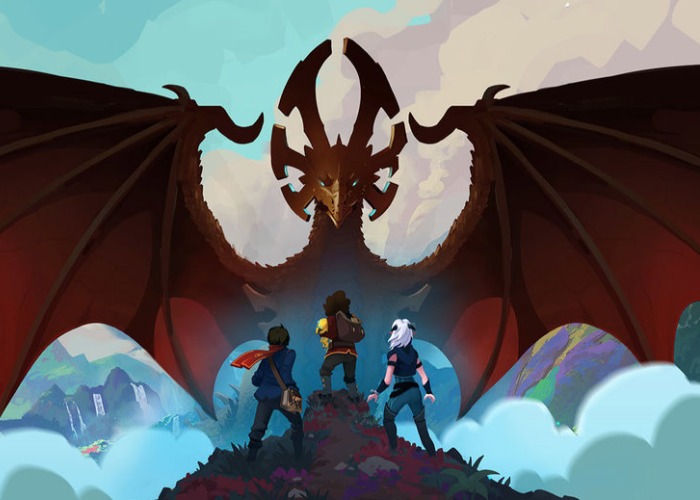
By the final few episodes of season three of The Dragon Prince, a number of disparaging, distant characters have gathered together to fight off a giant army of soldiers, all of whom have transformed into raging, hostile creatures. The main characters have been at odds with each other in various degrees, mostly due to confusion over true end goals and disinformation/misinformation generated to manipulate people like chess pieces or prevent hurt feelings, but by the end, they come together in a slightly uneasy alliance to protect the great dragon and its egg/child from this horde–particularly its leader, Viren, who has become grotesquely corrupted by a literal magical monster in his ear. The battle is intense, the kind of close-knit battle that crusts and wanes with intensity and tension, near catastrophic failures opening up amazing moments of tide-turning successes. It’s as complete and rewarding as any endgame battle should be.
It’s also clearly not where The Dragon Prince wanted to go.
It’s unclear if there’s going to be a fourth season of The Dragon Prince. Its third season ends with a mysterious cliffhanger of sorts, but for all intents and purposes, all the major narratives seem to have been closed (not to mention a very contentious and serious issue behind the scenes). But the events of the first two seasons very much purported something grander and more epic in scope, a tale originally gathered to tell a more expansive, Game of Thrones-esque narrative. Animated shows have been trying to “go” Game of Thrones for a while now, with limited success. All Hail King Julian had one season of a Game of Throne parody which was rather restrictive in their fairly loose, family absurd comedy voice. Star Vs. The Forces of Evil didn’t go full Game of Thrones but had lofty ambitions that fell far, far short. Amphibia, which asks for an analysis on its own, couldn’t decide whether it wanted to be a tale of misguided warring factions or an episodic comedy of weird yet potent friendships; its second season plans to send its cast on a traveling mission across the land of Wartwood. This, mind you, is what Rapunzel’s Tangled Adventures did in its second season, which was both fine and clunky: fine in the sense it was still fun, entertaining, and intriguing, but clunky in that its cast often felt stuck in one place for too long, and the various encounters and characters they went up against were too fleeting to be particularly memorable (and, perhaps most unfortunately, Rapunzel’s struggle through her trauma took a very definitive backseat). Its current season immediately snapped them back to Corona in the time it took to do a song cure; All Hail made a pointed self-aware joke about the process, immediately opting to go back to its original episodic-is structure.
The Dragon Prince also, very clearly, had lofty goals. Its basic concept was easy enough on the surface: hostilities between humans and elves had reached an uneasy truce, but when the act of one particular human upsets a dragon–the destruction of its egg–all hell starts to break loose. It’s revealed early on that the egg was only taken, not destroyed, but the course of returning it can’t stop the drumbeat of war. Well… that’s what was supposed to happen. Similar to Ned Stark’s attempt to find out what happened to regarding the “death” Jon Arryn, which led to his beheading and the floodgates of absolute war and madness, The Dragon Prince seemed to chart its narrative on how two outsiders of an inevitable clash coped when their goal completely failed to match up against the drive for bloodlust, revenge, and misplaced justice. The driver of this was Viren, a misguided and hostile assistant to the late king whose death has him lashing out and desperate for revenge against the elves who killed him (rich in queer subtext, FYI). In just a few episodes, things escalate, fights are fought, dragons mess about, magic is casted, and so forth. It’s most telling moment was in season two, in which Viren has to convince a roundtable of human leaders to march on the elves, and he almost convinces them – save for one person, a kid. Her refusal to abide to his whims enrages him, doubly so when it convinces everyone else to back down as well. There was a sense that the show was going to really get in-depth here, with conflicting human lands responding to the threat (or non-threat) in different ways. To further that, Viren gets gradually corrupted by some kind of mysterious creature in a magic mirror; Ezran, upon learning his father is dead, departs from his crew to return home to try and rule.
But inside all those developments, there were some, what you may call, red flags. For one, Viren’s gradual corruption by that mysterious figure, whose name is Aaravos, took way too many episodes to get to its point. We also never learn much about that figure, other than he’s angry and is “in some kind of captivity” but with no context on what this even means (again, this seems like a development that was intended to reveal itself over time, but it never reveals enough for audiences to be curious or care). The corruption arc also brings up another issue: the show’s portrayal and execution of its magicks have been somewhat baffling, consisting of profound and wonderous special effects, but a severe lack of weight, or purpose, or logic, or consistency. I know that magic isn’t supposed to “make sense,” but also, did we need to see a mysterious bug sew creepy and grotesque webs inside Viren’s eye in order to see the projection of Aaravos? Callum’s magic cube possesses access to six Primal Sources of Magic, but we only see Callum’s execution of the Sky magic. The other five never pop up, or more specifically, they never pop up to the point that they should matter. I’m not even sure they even exist.
The Dragon Prince struck me as a show whose ambitions were larger than its narrative acumen, and perhaps its ratings limitations, could take it. It’s characters, marred within the dark, far-reaching depths of plans, ideologies, and temperaments that needed time to grow and function, had been hindered by many things, but in particular, its struggle to find its comic voice. The use of comedy in The Dragon Prince often felt like a desperate stretch to make its characters come off likable and appealing, but the kind of jokes told through its characters often hurt their characterization more than helped. Nothing exemplified this more than Rayla. Introduced as a fledgling assassin who grew doubts when confronted with her first kill, Rayla’s character shifted from a dark, conflicted character to a talented, plucky teenager, and the transformation created some real whiplash. It became impossible to square the intro of Rayla with the later iteration of her, one where she nearly came close to killing the king, to the one who skipped around town pretending to be a human, sprouting the kind of “haha humans amirite” jokes that could only be written by a writer.
It’s clumsy and awkward, but most of the jokes are. Some work by sheer design, mostly through Soren, who’s meathead goofiness is inherent in his character, which lets his clumsiness and/or idiocy comes across cutely amusing, but essentially part of his nature. (I especially love when his lack of intelligence stun characters into stuttering repose, struggling to explain themselves to him.) Other time they feel stilted, awkward, and kind of tasteless. One character remains weirdly blithe to his captor after being held in captivity for weeks, even months, as indicated by the growth of stubble on his face overtime. A mystical elf woman who teaches/guides Callum, Rayla, and Ezran also bursts out moments of silliness. Late in season three, there is not one but two “Sailor Moon transformation” visual jokes, but they’re so incongruent to the show’s overall vibe that they come off garish more than comical.
When The Dragon Prince works, it does work, mostly with its backstories and tales of the events of how its characters got to the tense and harrowing point of where they are today (a narrative tact taken with the humans, but curiously not with the elves). Yet it’s current story feels hamstrung, a bit meandering, and uncomfortable with how best to tell its story, both long-term and episodically. A good example is in the third season premiere, “Sol Regem.” Callum and Rayla have to sneak past a massive yet blind dragon, but the logistics of the story’s beats are clumsy. Callum supposedly has a wicked body odor that the dragon can sense (revealed in a pretty forced gag), but his odor doesn’t become a significant part of the story until late in the episode. Presumably the dragon would have been able to smell him earlier in the episode, but for some reason he doesn’t. It’s just wonky and sloppy, and really makes the tension of the moment confusing and less exciting. I also felt as if Ezran’s return to run Katolis, only for the plot machinations that allowed him to return to Callum and Ezran four episodes later (two of which have him sitting alone in prison), felt rushed and narratively shaky at best.
But it’s also a pretty representative beat of the show at large, a kind of broadly-scoped adventure that struggles in the smaller details, which wouldn’t be a problem if that broad scope was more tightly plotted, if the comic moments were stronger, if the characters were more consistent, and/or if the episodic stories were more significant. The Dragon Prince has all the potential in the world to a driven, harrowing, intriguing, and entertaining show, but it feels too beholden by a broader, 2000s-era kids-cable-network sensibility that no longer seems to apply, especially on Netflix. It doesn’t need to be darker or more violent. It ought to be bolder with its choices in how its characters and its world are warped and shaped by the confusion dangers around them, in the shifting loyalties and morally ambiguous decisions that need to be made. The third season suggests the show may be better off just telling a straight-forward adventure, with one main villain and one set of heroic characters out to stop them. We’ll see if that questionable fourth season makes the change.